

A revolution in energy storage:Bulgarian company deploys vanadium flow battery with potential to change the game
Classification:Company News
- Author:ZH Energy
- Release time:Jun-10-2025
【 Summary 】Monneke Bulgaria AD,VESS,Vanadium Redox Flow Batteries, VFB,Bulgaria,Long-duration energy storage
In
the era of rapidly developing renewable energy sources, a key question remains
how to store the energy produced when the sun is not shining or the wind is not
blowing. While lithium-ion batteries dominate the market, their durability and
safety continue to be the subject of debate. This is where redox flow
batteries come into play - a lesser-known but extremely promising
technology that could change the rules of the game in the energy sector.
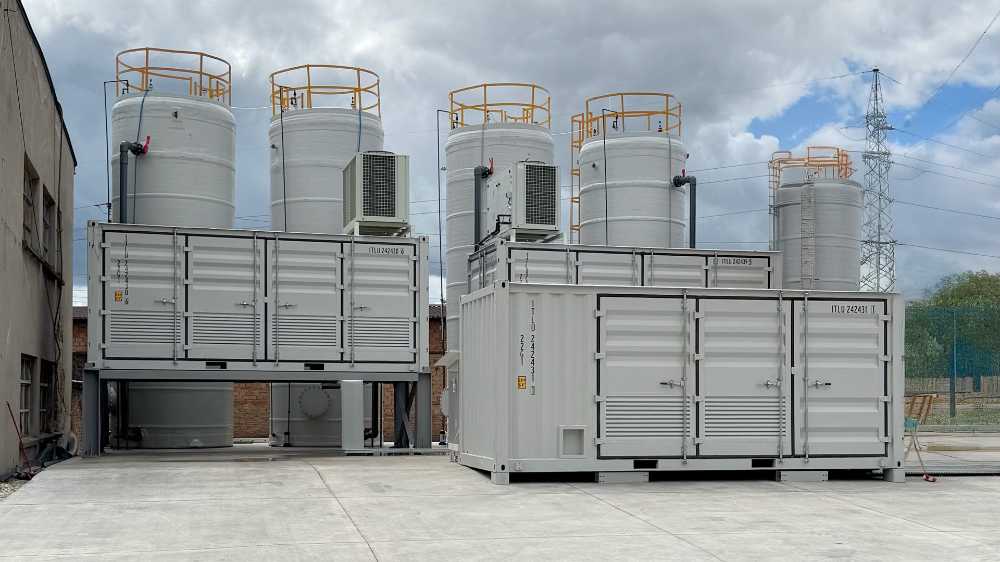
Recently, the
leading Bulgarian manufacturer in the mechanical engineering and mining
industry - Monek Bulgaria AD - announced the official commissioning
of a new generation of vanadium redox flow battery (VESS). With this move, the
company ranks among the first companies in the country and Eastern Europe to
successfully implement such an innovative energy storage technology.
Why do we need
innovative solutions?
The problems of
conventional batteries, especially lithium-ion batteries , are well
known. Their life cycle is relatively short, and over time they
inevitably degrade - losing some of their capacity with each charge
and discharge. This means they need to be replaced more often, which leads to
additional costs and generates significant amounts of hazardous
waste . In addition, there is a risk of overheating and thermal
breakdown , which can lead to fires - a serious concern for both
industrial installations and domestic applications.
These challenges are
driving the search for long-lasting, sustainable and safe
alternatives . It is here that redox flow batteries show their enormous
potential.
What makes redox
flow batteries so special?
Unlike conventional
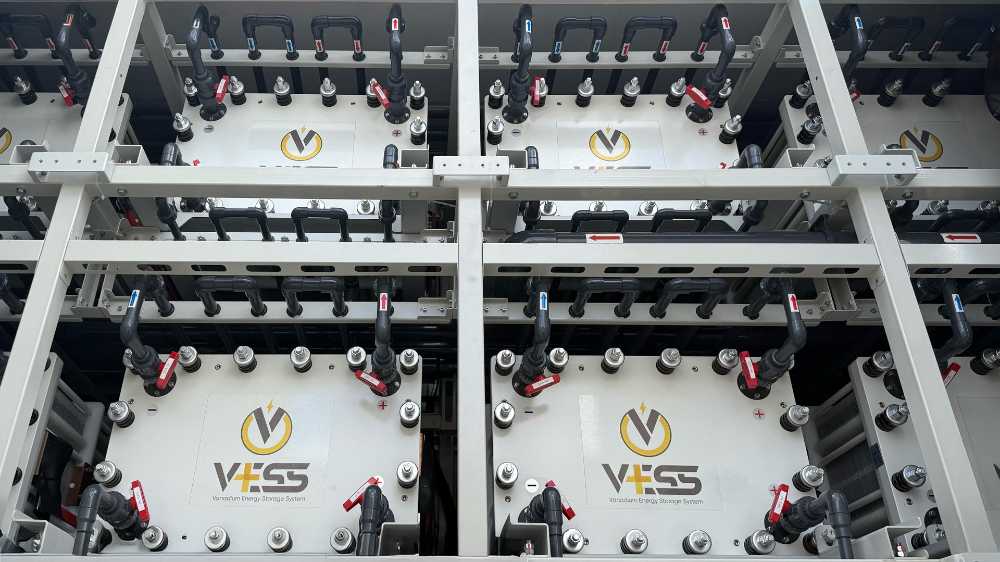
batteries, where the electrolyte and electrodes are in one housing, flow
batteries work on a completely different principle. Think of them as a
hybrid between a battery and a fuel cell. They store energy in liquid
electrolytes (in the case of VESS - an aqueous solution of vanadium
electrolyte), which circulate between two tanks and an electrochemical cell. It
is this separation of components that gives them a number of advantages:
l Longevity without degradation: One of the most impressive features of
vanadium flow batteries is their ability to withstand 100% depth of charge and
discharge thousands of times without losing capacity or degrading. This makes
them ideal for intensive loads and handling peak fluctuations - something often
found in solar and wind energy systems.
l Eternal electrolyte and high recyclability: The electrolyte in these batteries is
theoretically eternal. It does not wear out and can be used over and over
again. As a result, the system is up to 97% recyclable, making it an extremely
sustainable solution for the future. VESS says that their system can operate
for over 25 years without critical costs, and maintenance is minimal, thanks to
the developed remote monitoring systems.
l Safety First: Zero fire risk. The vanadium electrolyte is a non-flammable aqueous
solution, eliminating the ignition hazard inherent in some other battery
technologies. This is an important factor that attracts the interest of
financial and insurance institutions.
l Scalability: Thanks to the individual tanks, the capacity of flow batteries can
be easily increased simply by adding larger electrolyte tanks. This makes them
very flexible for a variety of applications - from maintaining reserves to load
balancing.
VESS: The pilot
project in Bulgaria
The industrial
vanadium flow battery, introduced by Monek Bulgaria AD, has a nominal power of
480 kW and an impressive total capacity of 3840 kWh (3.84 MWh), allowing for 8
hours of discharge duration. The system uses an aqueous solution of vanadium
electrolyte, stored in four 50-cubic-meter tanks, which not only guarantees
safety, but also provides high flexibility in capacity management.
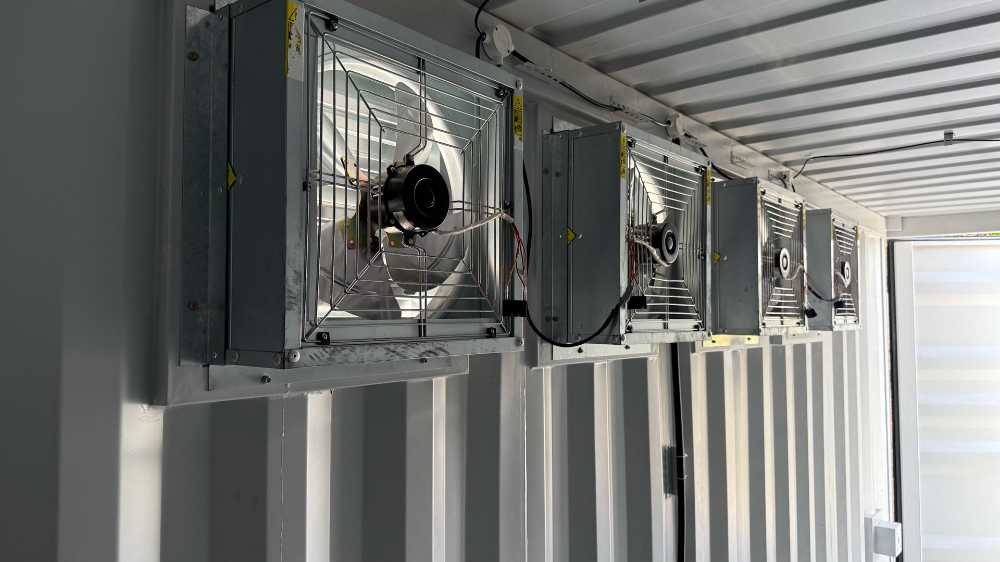
Designed for outdoor
installation and resistant to extreme weather conditions (from -20°C to +55°C),
the battery is an example of an engineering solution that can work in any
circumstances. Built-in protections and the possibility of intelligent
management through BMS and SCADA platforms provide additional security and
reliability.
The introduction of
this technology by Monek Bulgaria AD is an important step for the country and
the region. It not only demonstrates the commitment to innovation, but also
opens the door to a more sustainable and secure energy future in which Bulgaria
can play a key role.
The Way Forward:
Economic Aspects and Potential
While the initial
investment in flow batteries may seem higher, their long service
life and near -zero degradation result in a
significantly lower total cost of electricity storage in the long term.
This makes them more cost-effective in the long term compared to solutions that
require frequent replacement. In addition, their modular design allows for easy
scaling - capacity can be increased simply by adding more electrolyte tanks.
This makes them extremely flexible for a variety of applications - from grid
maintenance and industrial installations to large-scale renewable energy
storage projects.
The development of
technologies such as vanadium flow batteries is critical to the transition to clean energy. Their reliability, durability and safety position them as an important element in the future energy mix. With an increasing emphasis on sustainability and efficiency, we can expect these innovative solutions to play an increasingly important role in building the energy infrastructure of tomorrow.