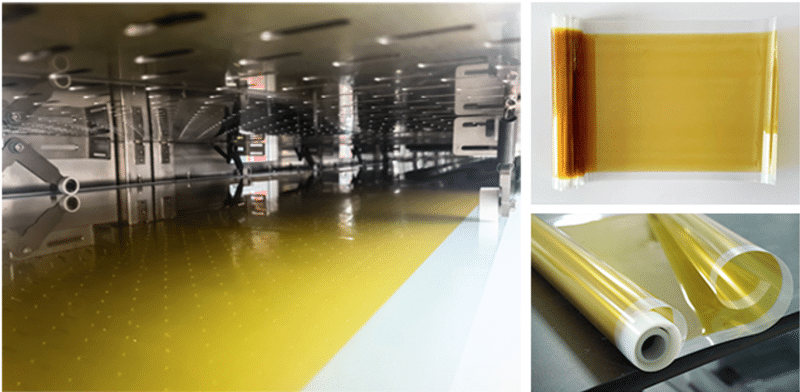
Porimion® High-Current-Density Flow Battery Membrane
Developed from an innovative non-fluorinated polybenzimidazole (PBI) resin system, this ion-exchange membrane is specifically engineered for high-current-density flow battery stacks. It offers enhanced mechanical strength and puncture resistance, delivering energy efficiency surpassing that of perfluorinated proton exchange membranes. The membrane is well suited for vanadium, titanium–bromine and acidic flow battery chemistries.
Its excellent vanadium-ion blocking capability significantly reduces self-discharge and improves coulombic efficiency during vanadium battery operation, effectively addressing the high self-discharge issue in fast-response frequency-regulation applications. This advancement is expected to accelerate the deployment of vanadium flow batteries in regulation services.
• High Strength & Ultra-Thin:Tensile and puncture strength are increased by over 100% compared with perfluorosulfonic membranes, withstanding carbon-fiber penetration. The uniform membrane thickness is reduced to 25 µm for stack use, enabling significantly higher current densities.
• High Selectivity:Proton conductivity matches that of perfluorosulfonic membranes, while vanadium-ion permeability is reduced by an order of magnitude, greatly improving coulombic and energy efficiency.
• Low Self-Discharge:Extremely low vanadium crossover raises coulombic efficiency to above 99%, substantially reducing self-discharge—ideal for long-duration, uninterrupted frequency-regulation operation.
• High Reliability:Validated through 5,000-cycle accelerated aging tests with no performance degradation.
• Environmentally Friendly:Eliminates the environmental impact of fluorinated permanent plastics; fully degradable and compliant with EU and North American defluorination requirements.
TEST PERFORMANCE
Performance comparison between the Porimion® flow battery membrane and PFSA membranes in a 1 kW vanadium flow battery stack.
| Power Density ( mW/cm² ) | Porimion® Membrane | PFSA Membrane 1 | PFSA Membrane 2 | ||||||
|---|---|---|---|---|---|---|---|---|---|
| CE(%) | VE(%) | EE(%) | CE(%) | VE(%) | EE(%) | CE(%) | VE(%) | EE(%) | |
| 120 | 99.6 | 88.9 | 88.5 | 96.2 | 87.8 | 84.4 | 95.6 | 88.4 | 84.6 |
| 150 | 99.7 | 86.6 | 86.1 | 96.0 | 85.1 | 81.7 | 95.8 | 85.6 | 82.0 |
| 180 | 99.6 | 83.9 | 83.5 | 96.2 | 82.4 | 79.2 | 96.0 | 82.8 | 79.5 |
| 210 | 99.6 | 82.3 | 82.0 | 96.2 | 80.7 | 77.6 | 96.0 | 82.7 | 77.5 |
| 240 | 99.6 | 81.3 | 81.0 | 96.2 | 79.0 | 76.0 | 96.1 | 78.7 | 75.7 |
SPEEK、SPPSU Flow Battery Membrane
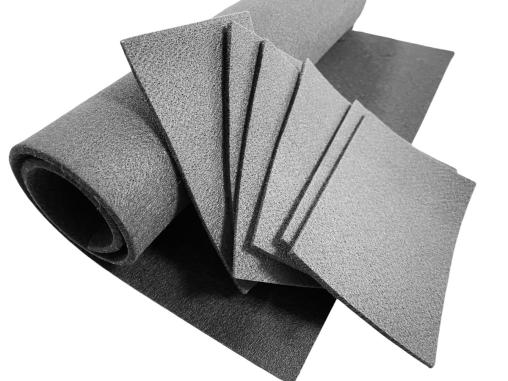
High-Performance Catalytic Electrode
Graphelt® graphite felt electrodes for flow batteries are produced from PAN-based pre-oxidized fiber mats. By loading catalysts onto the surface of the graphite fibers, the electrodes deliver enhanced battery performance. They are widely used across various types of flow batteries, and customized catalyst-loaded electrode products can be provided to meet specific customer requirements.
• High catalytic activity for improved energy efficiency;
• Excellent stability with no significant performance degradation after thousands of cycles;
• Customized development with multiple catalyst options to suit different flow battery chemistries.
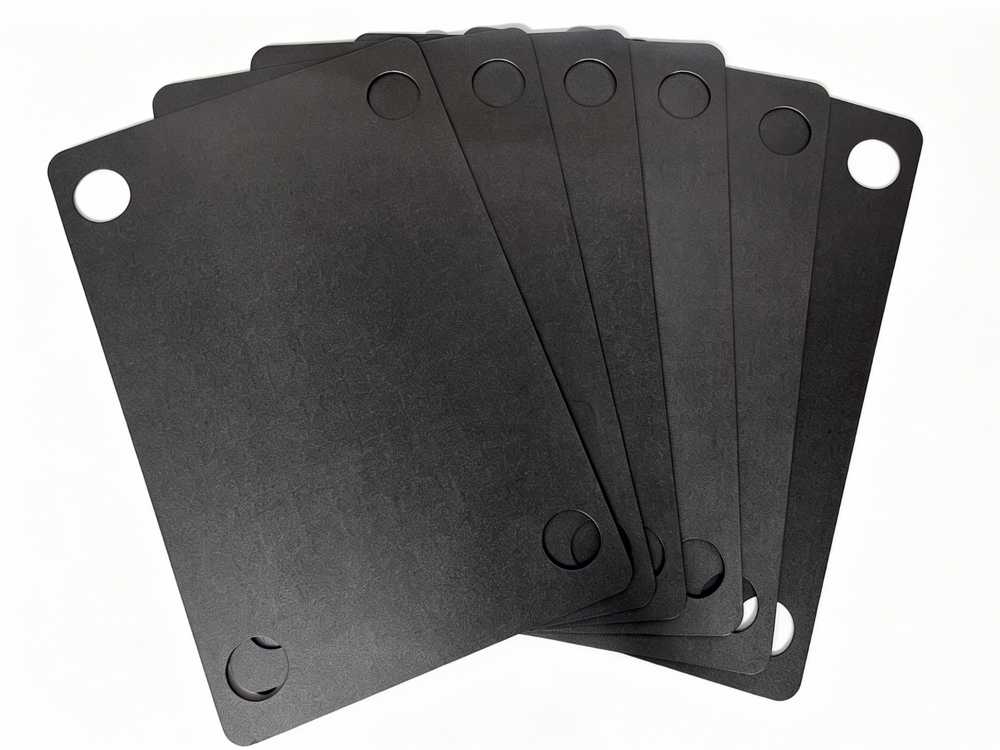
Bipolar Plate
As a key component of flow battery stacks, bipolar plates provide electrical connection between cells and contribute to efficient energy conversion. ZH Energy provides high-performance bipolar plates with optimized conductivity, corrosion resistance, and structural stability, supporting the reliable operation of flow battery systems from laboratory research to large-scale applications.
• High electrical conductivity for reduced stack resistance;
• Excellent corrosion resistance for extended service life;
• Robust mechanical stability for reliable stack assembly;
• Customizable designs for different flow battery technologies.
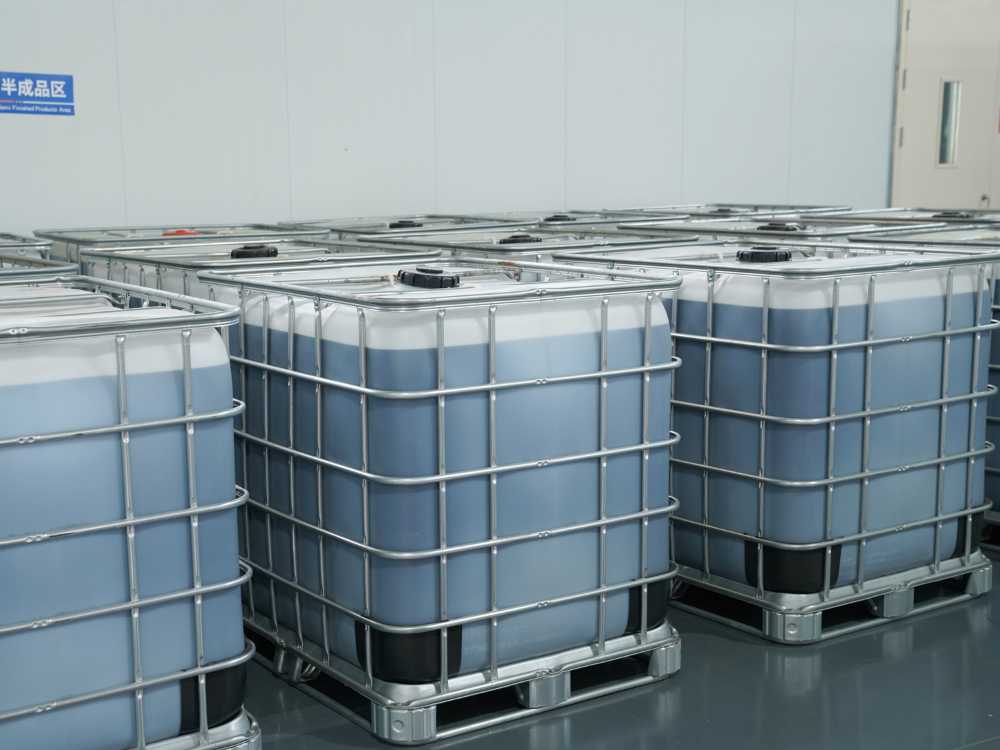
Vanadium electrolyte
Vanadium electrolyte is a core component of vanadium redox flow battery (VRFB) systems, enabling energy storage and release through reversible electrochemical reactions. ZH Energy provides high-performance vanadium electrolyte with optimized vanadium concentration, high purity, and excellent stability, supporting reliable operation and long service life of flow battery systems from laboratory research to large-scale energy storage applications.
• High Purity & Stability: Ensures consistent electrolyte performance and long-term system reliability.
• Excellent Cycling Performance: Supports extended charge-discharge cycles for enhanced battery lifetime.
• Optimized Electrochemical Performance: Improves energy efficiency and maintains stable battery operation.
• Safe & Reliable: Water-based electrolyte with inherent safety advantages for long-duration energy storage.
• Flexible Customization: Tailored electrolyte specifications to meet different flow battery system requirements.