Flow Battery Stack Leakage: A Key Challenge for Commercialization — Four Sealing Strategies Compared
Classification:Industrial News
- Author:ZH Energy Tech Team
- Release time:Jul-21-2026
【 Summary 】Who Leads the Way in Sealing Technology? Gasket Sealing, Adhesive Bonding Sealing, Laser Weld Sealing, Structural Sealing, and More.
There is a saying in the flow battery industry:
“Stack leakage is an unavoidable rite of passage for every company moving toward commercialization.”
Stack leakage mainly occurs in two forms: external leakage and internal crossover.
External leakage happens when electrolyte escapes from the stack, causing corrosion risks and affecting system operation.
Internal leakage occurs when positive and negative electrolytes mix inside the stack, reducing coulombic efficiency and gradually impacting system performance and lifetime.
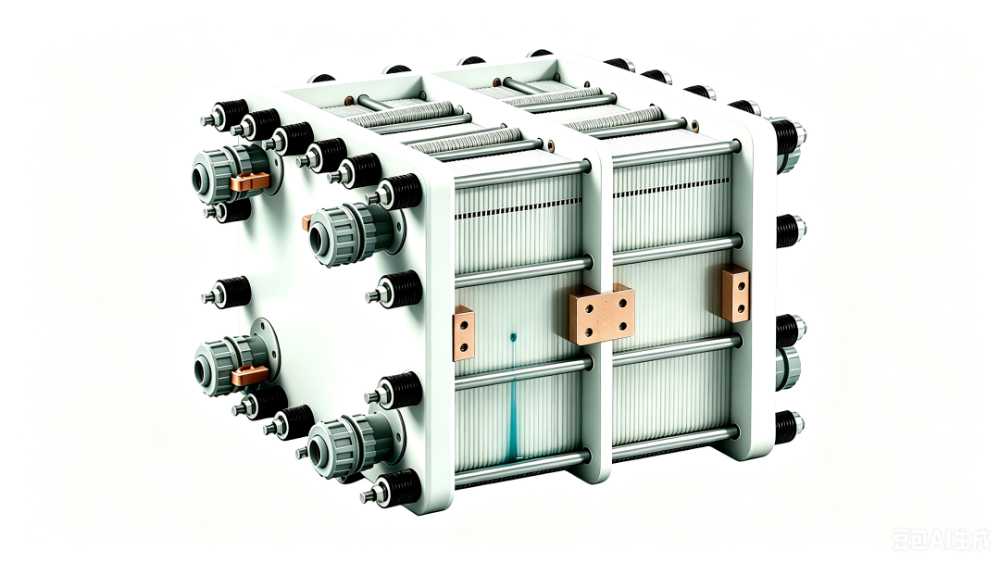
Stack leakage is usually caused by a combination of factors, including:
Design and Manufacturing Issues
Improper sealing design may lead to uneven electrolyte distribution and excessive stress on sealing areas.
Manufacturing defects, dimensional deviations, or improper assembly can create stress concentration and leakage paths.
Material Degradation
Long-term exposure to corrosive electrolytes, temperature fluctuations, and oxygen can cause sealing materials to age, deform, crack, or lose elasticity.
Continuous chemical erosion may eventually lead to sealing failure.
Operating Conditions
Thermal expansion differences between materials can generate mechanical stress.
Temperature fluctuations, pressure imbalance, gas accumulation, and improper operating conditions may accelerate leakage risks.
The most widely used sealing method today.
Elastic materials such as fluororubber and silicone rubber are compressed between stack components to prevent electrolyte leakage.
Advantages
Mature technology
Easy assembly and maintenance
Challenges
High cost of corrosion-resistant materials
Long-term aging and deformation
Requires precise pressure control
2. Adhesive Bonding
Components are integrated using epoxy resin, polymer adhesive films, or UV-curable adhesives.
Advantages
Reduces leakage pathways through integrated design
Requires lower assembly pressure
Enables lighter stack structures
Challenges
More complex manufacturing processes
Potential thermal stress during bonding
Long-term reliability needs further validation
3. Laser Welding
Laser welding creates an integrated sealing structure by melting and bonding components such as flow frames and membranes.
Advantages
Excellent sealing performance
Suitable for automated mass production
Eliminates the need for traditional sealing materials
Challenges
Higher initial equipment investment
Strict material requirements
Complex process control
4. Structural Sealing Design
Instead of relying only on sealing materials, structural optimization improves sealing reliability.
Examples include:
Honeycomb sealing structures to improve electrolyte distribution and prevent leakage;
Integrated sealing designs that reduce sealing components and leakage pathways;
Self-locking structures that enhance mechanical stability.
The key to solving leakage challenges lies in reducing mechanical stress and designing structures that can better accommodate stress.
Future development will focus on:
Material Innovation
Developing sealing materials with better corrosion resistance, low compression deformation, and improved durability.
Exploring multifunctional materials such as conductive sealing materials.
Process Innovation
Advanced welding technologies are expected to replace traditional sealing methods in large-scale manufacturing.
Optimized bonding processes can reduce internal stress and improve long-term reliability.
Structural Innovation
Biomimetic designs such as honeycomb structures.
Integrated stack designs to minimize leakage points.
Intelligent Manufacturing
Fully automated manufacturing, assembly, and leak detection.
Online monitoring systems for predictive maintenance.
To address the industry-wide challenge of stack leakage, ZH Energy’s FStack 2.0 Series Stack delivers outstanding sealing reliability.
Since entering mass production and delivery in September 2025, all delivered FStack 2.0 stacks have achieved zero leakage operation.
The series has achieved strong market growth, with global sales increasing by 150% year-on-year, driven especially by overseas markets. Its exceptional sealing reliability has become a key foundation for global expansion.
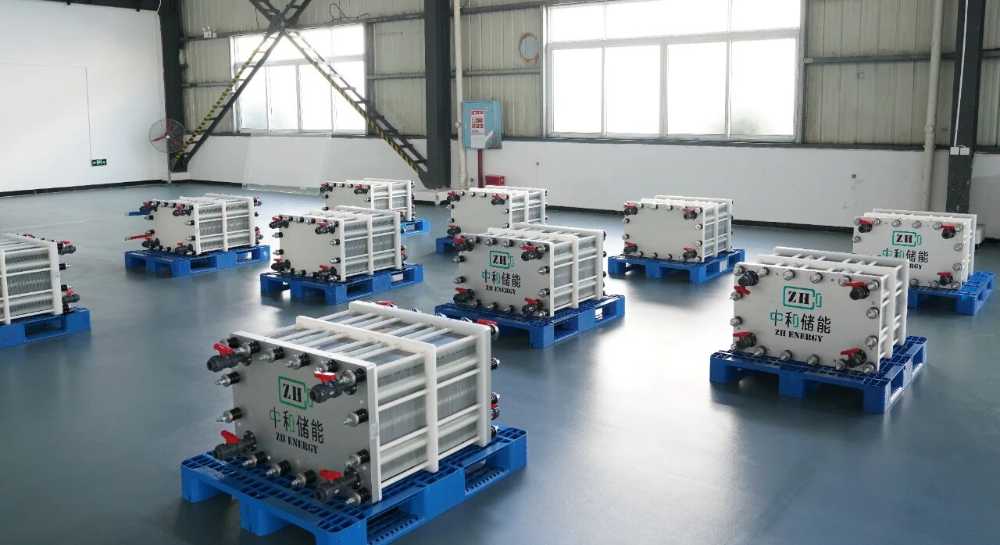
The zero-leakage performance has been validated across multiple flow battery chemistries, including: Vanadium redox flow batteries, Iron-chromium flow batteries, Organic flow batteries, Zinc-based flow batteries, and others.
Long-term operation under diverse electrolyte environments and working conditions demonstrates the robustness of ZH Energy’s engineering capabilities.
The product has also obtained international certifications including UL 1973 and IEC 62932-2-2, providing additional third-party validation of its safety and reliability.
Zero leakage is not a coincidence — it is the result of systematic engineering excellence.