Porimion® High-Current-Density Membranes for Flow Batteries | New Product Chapter
Classification:Company News
- Author:ZH Energy Tech Team
- Release time:Jan-20-2026
【 Summary 】Designed specifically for high-current-density stacks, it offers enhanced mechanical strength and puncture resistance, delivering energy efficiency beyond that of perfluorinated proton-exchange membranes.
As flow batteries advance toward higher energy efficiency, lower system costs, and large-scale deployment, the membrane has become a core material that determines both the technical performance ceiling and commercial competitiveness. The industry is shifting from traditional membrane systems toward technologies that support higher current densities, enhanced stability, and extended lifetimes. Among them, next-generation non-fluorinated ion-exchange membranes—known for their tunability, cost advantages, and environmental friendliness—are emerging as an important development direction across electrochemical energy systems.
In line with this trend, the Hechu New Materials® team, building on nearly two decades of expertise accumulated by founder Dr. Wei Xie in non-fluorinated ion-exchange membranes, has partnered closely with Central South University to launch the Porimion® membrane tailored for high-current-density flow battery applications.
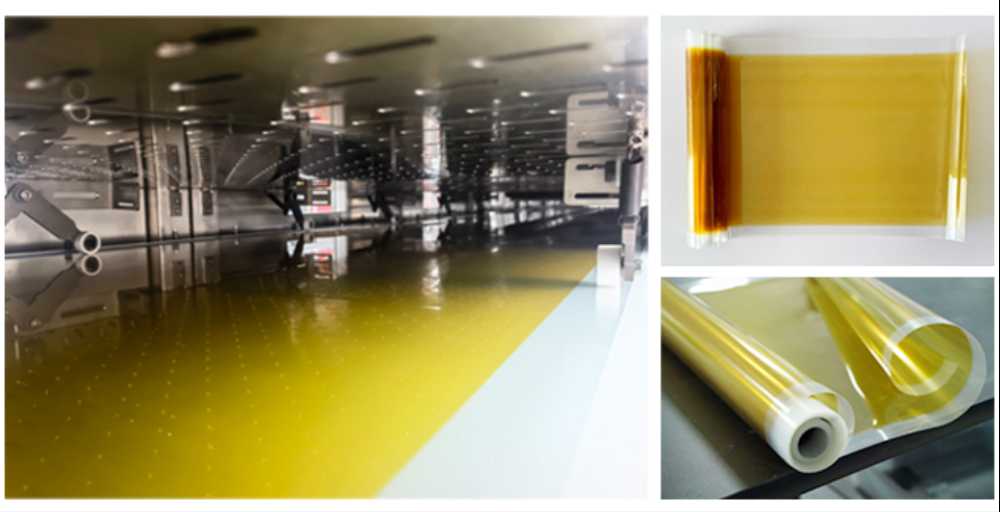
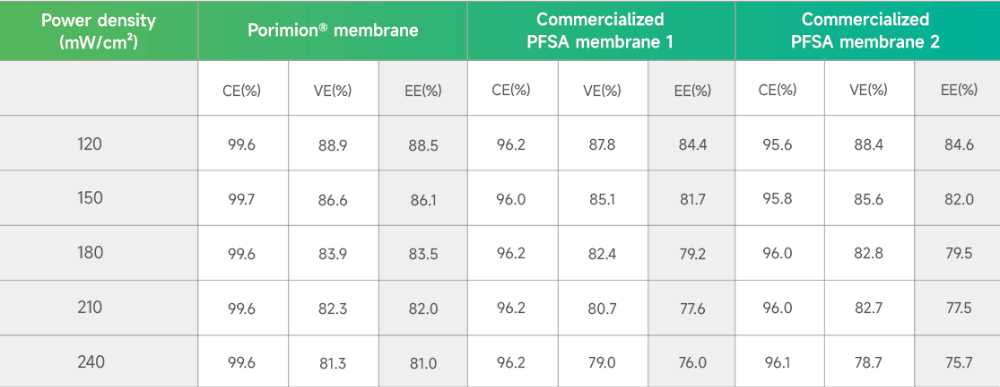
Developed from an innovative non-fluorinated polybenzimidazole (PBI) resin platform, this ion-exchange membrane is engineered specifically for high-current-density flow battery stacks. It delivers higher mechanical strength and puncture resistance, achieving energy efficiencies that surpass those of perfluorosulfonic acid (PFSA) membranes. The membrane is particularly well-suited for vanadium and titanium–bromine flow battery systems. Its exceptional vanadium-ion blocking capability significantly reduces self-discharge and improves coulombic efficiency, effectively addressing the long-standing issue of excessive self-discharge in vanadium batteries during continuous frequency-regulation operation—thereby accelerating their adoption in grid frequency-regulation applications.
Ultra-strong & ultra-thin
Tensile and puncture strengths exceed those of PFSA membranes by more than 80%, with robust resistance to carbon-fiber penetration. Homogeneous membrane thickness is reduced to 25 μm in stack applications, enabling substantially higher current densities.
High selectivity
Proton conductivity matches that of PFSA membranes, while vanadium-ion permeability decreases by an order of magnitude, significantly improving both coulombic efficiency and overall energy efficiency.
Low self-discharge
Extremely low vanadium-ion crossover enables coulombic efficiencies above 99%, dramatically reducing in-operation self-discharge—making the membrane ideal for long-duration, uninterrupted frequency-regulation scenarios.
High reliability
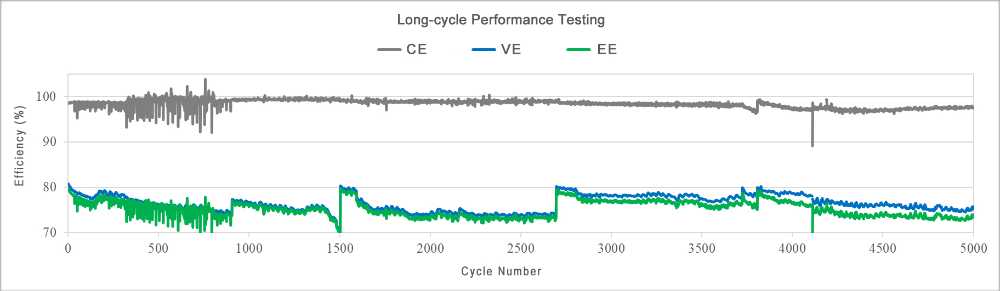
Validated by 5,000-cycle accelerated aging tests with no observed performance degradation.
Environmentally friendly
Fundamentally eliminates the environmental risks associated with fluorinated “forever chemicals.” The membrane is green, degradable, and compliant with de-fluorination requirements in the EU and North America.
Specifications
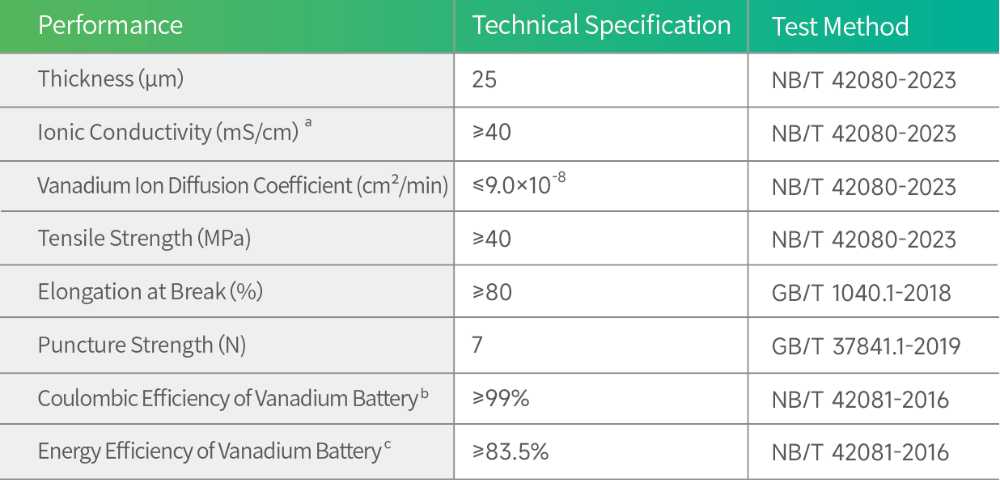
a Available in 20–50 μm thickness.
b, c Tested on ZH Energy’s flow battery, with a power density of 180mW/cm².
Test Performance
Performance comparison between the Porimion® flow battery membrane and PFSA membranes in a 1 kW vanadium flow battery stack.
Porimion® membrane 5,000-cycle long-term test in a 1 kW vanadium stack:
Operated at a constant power density of 240 mW/cm². Performance loss caused by vanadium-ion crossover can be fully restored to the initial level through electrolyte remixing.
Recommended Add-on:
Membrane Ionic Conductivity/Permeability Test Fixture [Utility Model Patent: 202322431205.2]
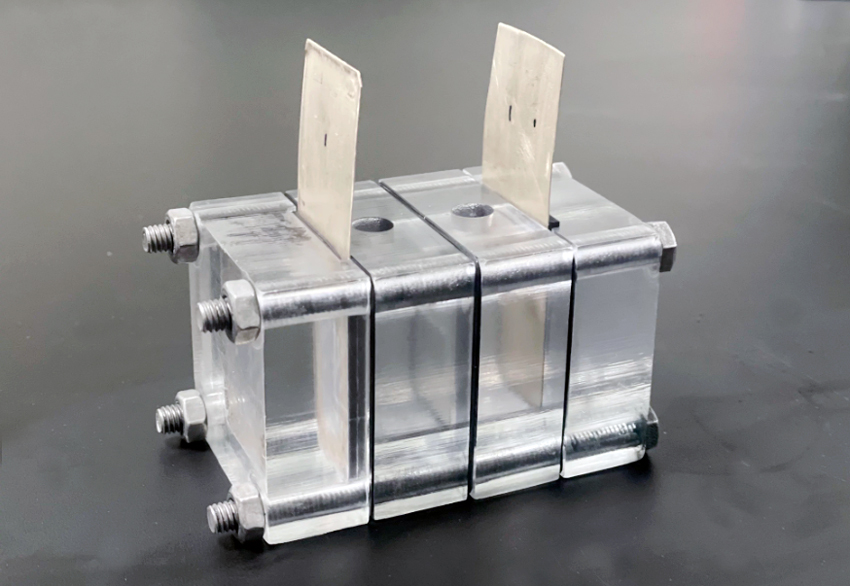
A compact, modular ion-conductivity test fixture designed for universities and research institutes. It focuses on core membrane performance evaluation for flow batteries and fuel cells, enabling accurate measurement of area resistance, ionic conductivity, and ion permeability. Compatible with laboratory R&D, teaching demonstrations, and material validation, it provides reliable and stable testing support for energy-materials research.